
It's 6 a.m. ET, polling locations in these 8 states are open
Eight states’ polling locations opened at 6 a.m. ET, including those in Connecticut, New Jersey, New York, New Hampshire and Virginia.
In Indiana and Kentucky, polls began opening at 6 a.m. ET, but some in the central time zone will open at 7 a.m. ET.
In Maine, nearly all polls opened at 6 a.m. ET, but municipalities with less than 500 people can open as late as 10 a.m. ET.
The tiny New Hampshire township of Dixville Notch voted at midnight, in line with a decades-long tradition; Vice President Kamala Harris and former President Donald Trump tied with three votes each.
Keep calm and trade on: For investors, politics may be best left at the polls
Keep calm and trade on — that’s the mantra many investors are repeating to themselves through one of the most turbulent news weeks of the year.
Tuesday is election day in a tight race to determine the next president of the United States. On Thursday, the Federal Reserve will announce its next interest rate decision, the first since officials cut interest rates by half of a percentage point and since unemployment data revealed a weakening labor market.
Still, investors don’t appear to be letting their jitters get to them — at least not entirely.
Markets were volatile on Monday and ultimately closed lower as traders failed to find solid footing ahead of this week’s news. But that doesn’t mean investors are feeling pessimistic: Market gains year-to-date through October have been the strongest in any election year since the 1950s, when the S&P 500 was first created.
“These gains are supported by an economy that remains resilient and forward earnings that reached yet another record high,” wrote Keith Lerner, chief market strategist at Truist, in a note Monday.
October’s jobs numbers disappointed Wall Street, but many investors expect that the setback is temporary and due to extreme weather events like hurricanes Helene and Milton. Plus, economic data shows that Americans are still spending money. The US economy grew more than expected in the third quarter of 2024, and much of that growth came from strong consumer spending, which was at its highest level in over a year.
Read more about the impact the election may have on Wall Street here.
Hindus in southern India pray for a Harris victory
Around the world, all eyes are on the US election — even Hindu worshipers in southern India, who prayed for a Kamala Harris victory on Monday.
Harris is the daughter of Indian and Jamaican immigrants, with her mother born in the state of Tamil Nadu before moving to the US for a doctoral program. Harris has shared childhood memories of visiting her grandfather in Chennai and has spoken about how her Indian heritage has influenced her life and career.
In the videos, banners with Harris’ face are displayed next to idols of Hindu gods, with priests offering prayers and flower petals to the idols.
Many Indian Americans were energized after Harris became the new Democratic nominee, with national and grassroots organizers from the community citing a groundswell of support for the Harris campaign in the weeks after she announced her candidacy.
Wet weather to hit battleground Great Lakes states today
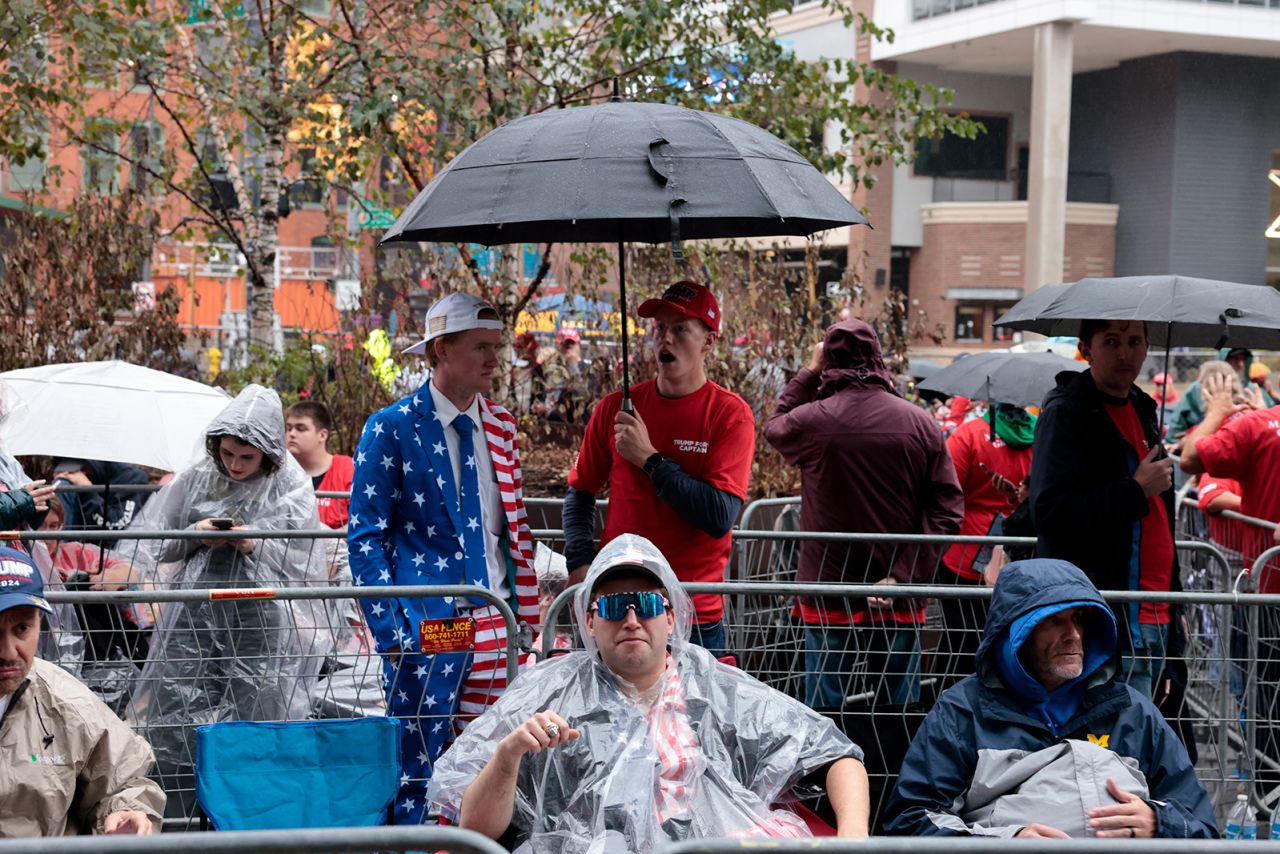
Some key battleground states are being hit by a strong cold front on Election Day that’s bringing heavy rainfall and severe storms.
The heaviest rain is falling from eastern Texas to the Missouri-Illinois border, including St. Louis. Slow moving storms are also tracking over the same areas, bringing numerous flash flood warnings that call for life-threatening flash flooding. Some of these warnings report that 3-8 inches of rainfall have fallen in the overnight hours.
While the rainfall will continue to slowly shift east, what has already fallen could affect early morning voters trying to get out and vote.
The front will continue to head east, bringing showers to Minnesota and the battleground states of Wisconsin and Michigan south to Louisiana. Rainfall has been noted to slightly reduce voter turnout in previous elections.
Wisconsin looks to have the worst weather of CNN’s seven battleground states, with the Storm Prediction Center issuing a level 1 of 5 severe storm threat for much of the state. Widespread showers and even thunderstorms could produce isolated wind gusts more than 60 mph and a brief tornado.
The heaviest rainfall along the front today will fall from east Texas to southern Indiana.
Poll opening times on Election Day: What you need to know for your state
Election Day is here. Millions of Americans have already voted early, but if you plan on voting in person today, it is important to know that the time polls open vary by location, sometimes within a county or municipality in a state.
Here’s a look at some of the earliest poll opening times (all times in ET):
6 a.m.
- Connecticut
- Indiana (Polls in central time open at 7 a.m. ET)
- Kentucky (polls in Central Time open at 7 a.m. ET)
- Maine (Almost all polls open between 6 a.m. and 8 a.m., but municipalities with less than 500 people can be open as late as 10 a.m.)
- New Hampshire (polls can open between 6 and 11 a.m. – Dixville Notch voted at midnight)
- New Jersey
- New York
- Virginia
6:30 a.m
- Ohio
- North Carolina
- West Virginia
- Vermont (polls can open as early as 5 a.m. and as late as 10 a.m., but this year the earliest poll opening is at 6:30 a.m.)
7 a.m.
- Alabama (some polls observe Eastern Time and will open at 7 a.m. ET, however most polls operate in Central Time and will open at 8 a.m. ET).
- Delaware
- Washington, DC
- Florida (polls in Central Time open at 8 a.m. ET)
- Georgia
- Illinois
- Kansas (some polls open at 8 a.m. because of time zones)
- Maryland
- Massachusetts (cities or towns can choose to open as early as 5:45 a.m. ET)
- Michigan (some polls open at 8 a.m. ET because of time zones)
- Missouri
- Pennsylvania
- Rhode Island
- South Carolina
- Tennessee (Polling places with a population of more than 120,000 must open by 7 a.m. ET)
8 a.m.
- Arizona
- Iowa
- Louisiana
- Minnesota (Municipalities with fewer than 500 registered voters can open polling places as late as 11 a.m. ET)
- South Dakota (some polls open at 6 a.m. ET depending on time zone)
- North Dakota (polls can open between 8 and 11 a.m. ET)
- Oklahoma
- Texas (polling locations in CT open at 8 a.m. ET and locations in MT open at 9 a.m. ET)
- Wisconsin
For more information on how to vote in your area, see CNN’s voter handbook.
Good morning and welcome to Election Day
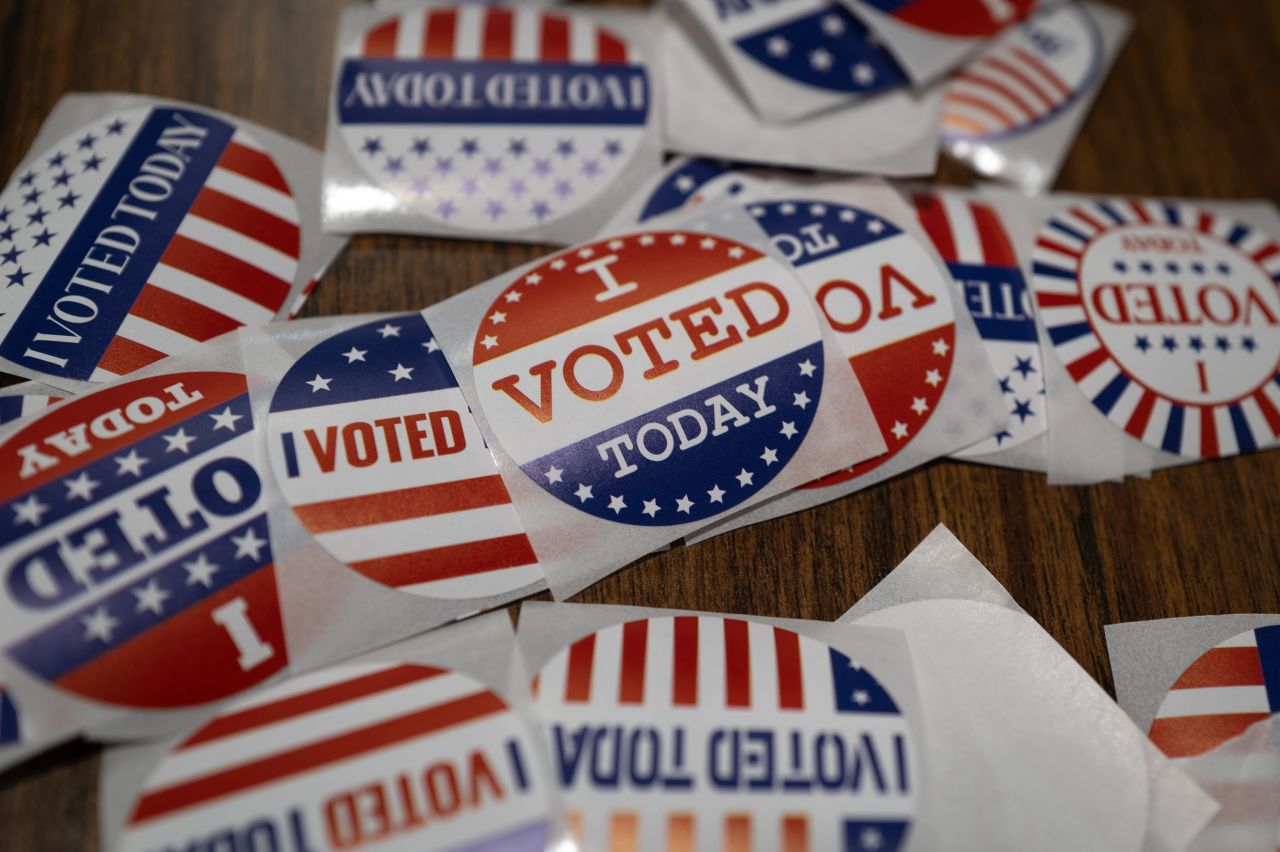
It’s Tuesday, November 5, and polls are beginning to open across the country.
Last night, the presidential candidates made their final late-night pitches to potential voters in battleground states.
In former President Donald Trump’s final rally, he argued that his real opponent was not Vice President Kamala Harris but an “evil Democrat system.” Harris, meanwhile, did not mention Trump, but ended her 107-day campaign with a pledge to “turn the page on a decade of politics that has been driven by fear and division.”
Here’s what else to know this morning:
- First ballots cast: Harris and Trump have tied with three votes each in the tiny New Hampshire township of Dixville Notch, which kicked off Election Day as one of the first places in the country to report its presidential preference.
- Harris’ final rally: Lady Gaga performed at Harris’ final rally, singing “God Bless America.” Oprah Winfrey also took the stage with 10 first-time voters and a stark warning that: “If we don’t show up tomorrow, it is entirely possible that we will not have the opportunity to ever cast a ballot again.”
- Trump’s final rally: Trump finished his campaign in Michigan, the same place he has closed three previous presidential campaigns campaign. He repeated many of his campaign promises, such as vowing to impose hefty tariffs and to crack down on illegal immigration, and brought his children on stage alongside him.
Here's how the Electoral College works and why a candidate needs at least 270 electoral votes to win
When Americans cast their votes today, they are not directly electing the presidential candidates themselves. Voters are casting ballots for competing slates of “electors” who will in turn cast the actual votes for president and vice president on December 17. Collectively, the electors from all 50 states and the District of Columbia are referred to the “Electoral College.”
The presidential candidate who wins the majority of the popular vote on election night does not necessarily win the White House. In order to win the presidency, a candidate must win a majority of votes in the Electoral College.
Here’s how the Electoral College works:
- The Electoral College is comprised of 538 electors who represent all 50 states and the District of Columbia.
- Each state has between three and 54 electoral votes. The number of electors from any given state is determined by adding its total number of US senators and US representatives. (D.C. gets three electoral votes—the number it would have if it were a state and the minimum number of electors possible for any state.)
- A candidate needs a majority of electoral votes – 270 – to win.
- In 48 states and the District of Columbia, all electoral votes are awarded to the candidate who wins a plurality of the popular vote in that state. This is known as the “winner-take-all” system. Two states – Maine and Nebraska – do not award their electoral votes according to a winner-take-all system.
- After the general election, electors meet in their respective states on the first Tuesday after the second Wednesday in December to cast separate ballots for president and vice president. This year, electors will meet on December 17. The meeting is usually held in the state capitol or state house building.
- The Electoral College results are counted and certified by a joint session of Congress on January 6.
Read more about how the US election works.
TikTok helped put old political scandals on young voters' radar, activist says
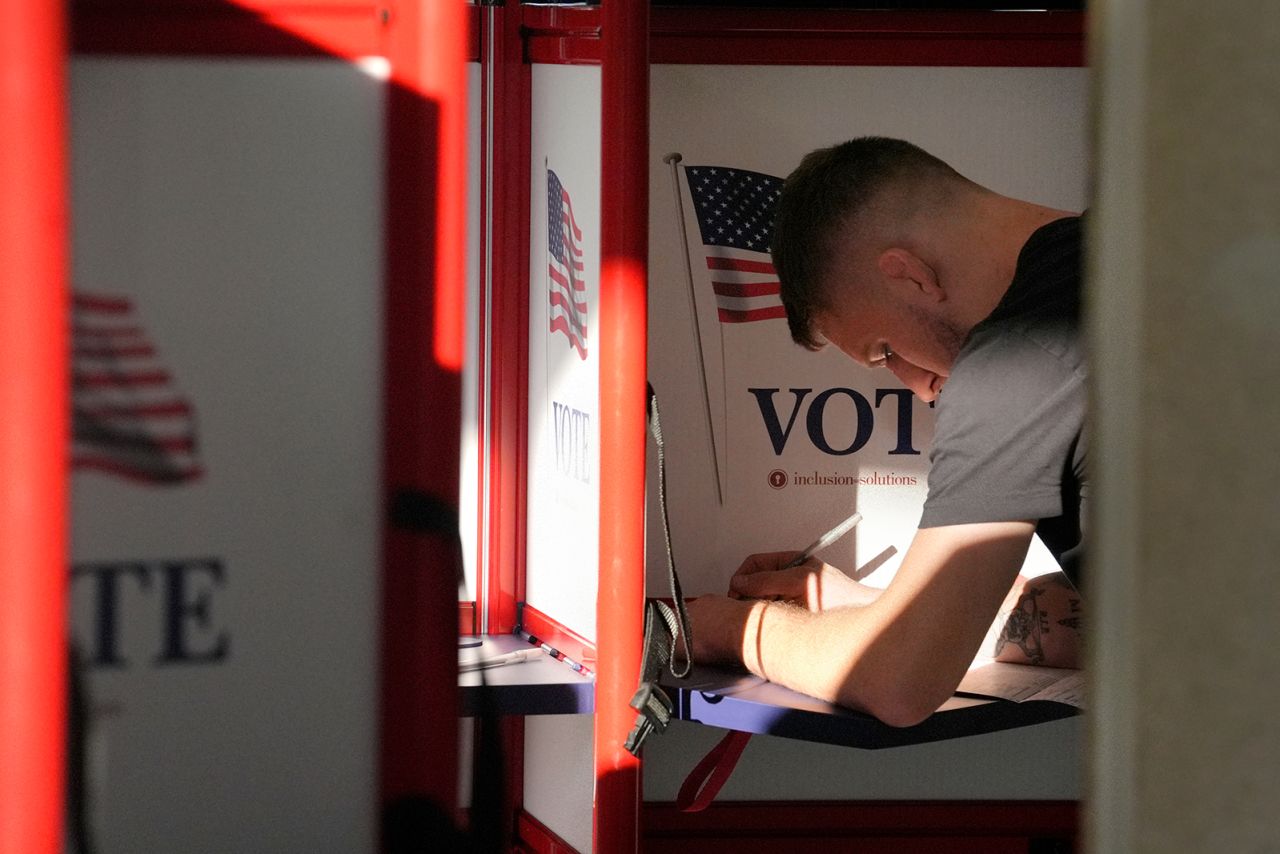
Both Kamala Harris and Donald Trump targeted Gen-Z voters as they campaigned ahead of the election, many of whom will be voting for the first time today.
Columbia University’s Columbia Magazine found that Gen Z make up more than 40 million voters, including eight million new voters.
And social media’s influence on these voters cannot be underestimated, according to Aidan Kohn-Murphy, founder of advocacy group Gen-Z for Change. He told CNN that TikTok has helped inform many young people about the presidential candidates and their campaigns.
Key issues for younger voters are “climate, reproductive justice, gun violence and Biden’s incredibly unpopular support for the Israeli government,” Kohn-Murphy said.
He said that young people shared information on TikTok in a “peer-to-peer model, that really leads people to support candidates more.”
He also noted that many first-time voters did not have previous political scandals — such as former President Donald Trump’s “Access Hollywood” tape — on their radar, but social media had enabled them to learn more about the candidates.
Trump argues he’s really running against “an evil Democrat system,” not Harris, during his final rally
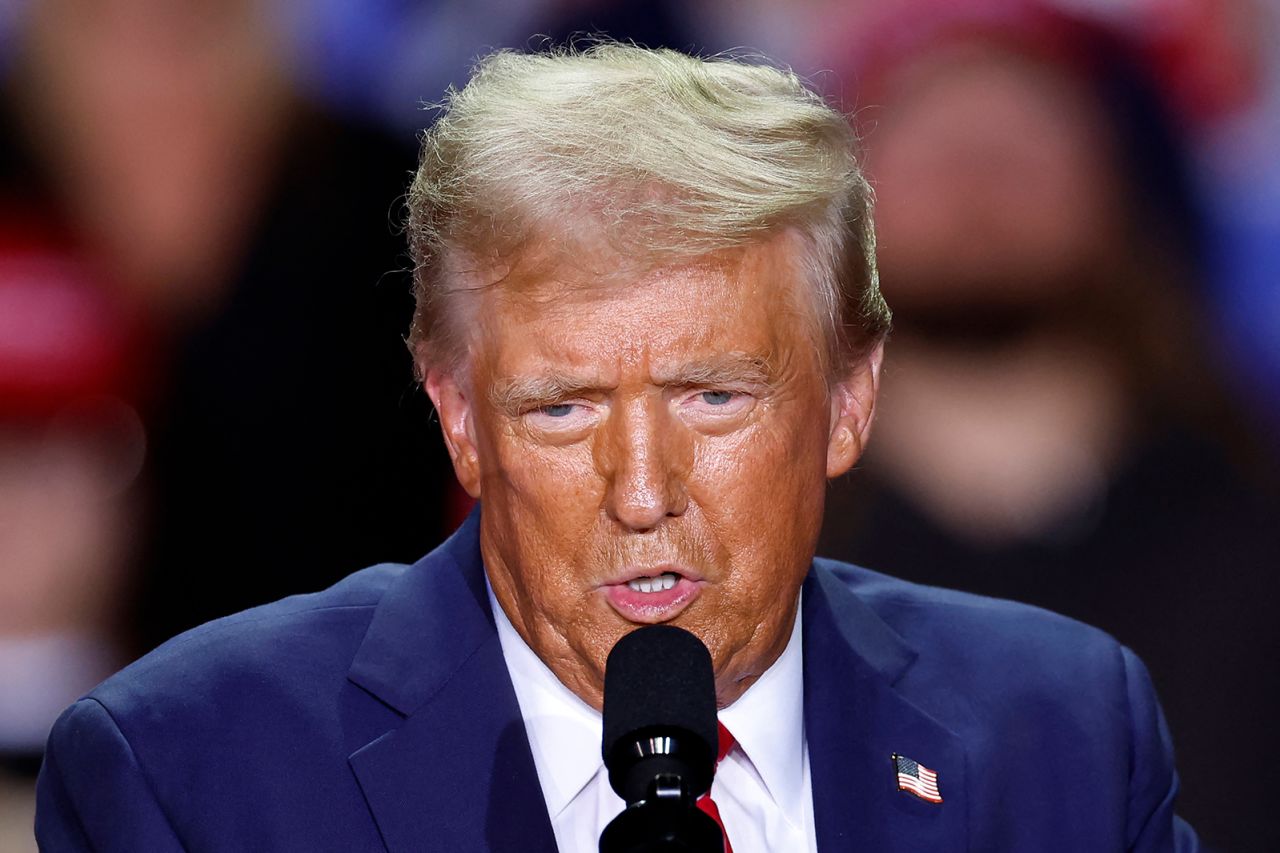
Former President Donald Trump argued during the final rally of his campaign that his real opponent this election was not Vice President Kamala Harris but instead “an evil Democrat system.”
“The silent majority is back and tomorrow you need to get out and vote,” Trump said.
It's decision day in America. Here's what to watch for
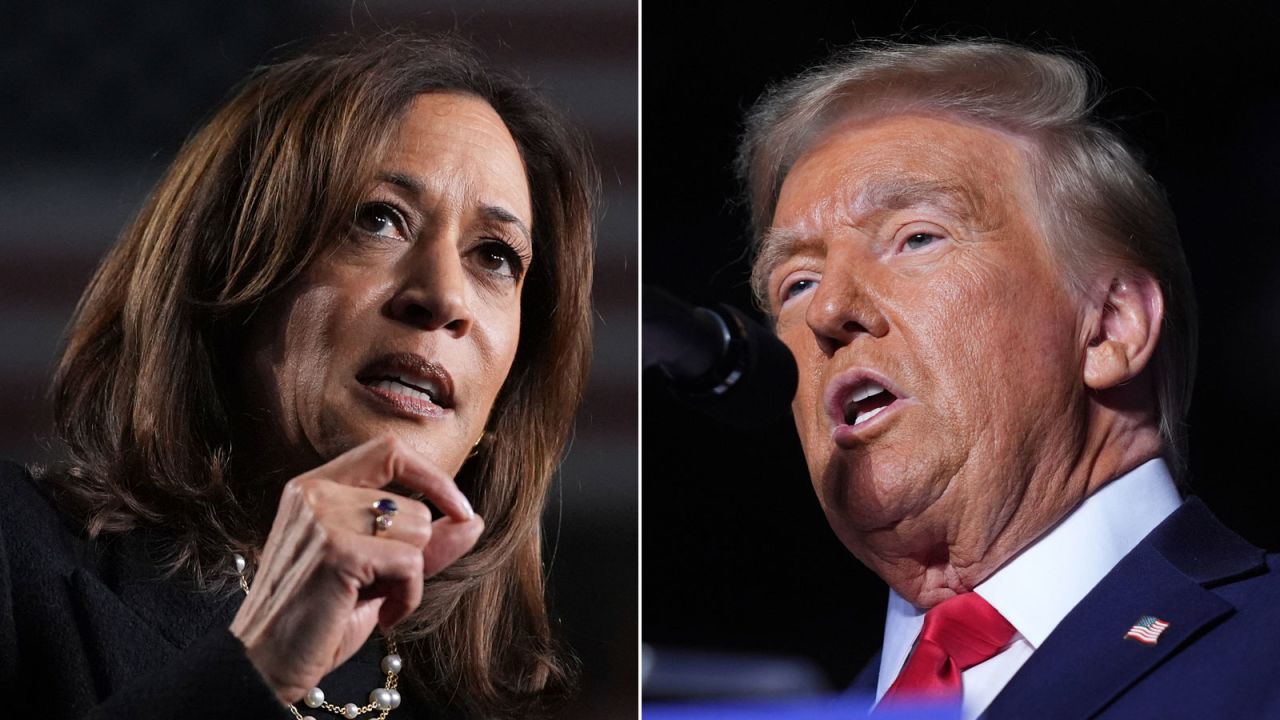
It’s decision day for voters in America’s battle for the White House and control of Congress — even if the results could take days or weeks to sort through.
Vice President Kamala Harris and former President Donald Trump are hoping to win over seven swing states: Michigan, Pennsylvania and Wisconsin, the three Great Lakes states that make up the “blue wall” that Trump cracked in 2016 but President Joe Biden carried in 2020, and Arizona, Georgia, Nevada and North Carolina, the four Sun Belt battlegrounds.
While the election of either candidate would be historic, there’s much more being decided Tuesday, including five states — Arizona, Florida, Missouri, Nebraska and South Dakota — voting on whether to turn back abortion bans with constitutional amendments.
Republicans hope to take advantage of a favorable Senate map, with Democrats defending seats in the red-leaning states of Montana, Ohio and West Virginia. The party’s hopes of holding onto its narrow House majority winds from the coast of Maine through New York’s Hudson Valley, the rolling hills of Virginia’s Piedmont, a “blue dot” in Nebraska and into California’s Orange County, where the political ebbs and flows of the Trump era have been on vivid display.
The initial results in the hours after polls close might not be determinative. States decide their own election procedures, and the order in which states count early, mail-in and Election Day votes varies across the map — as does how quickly certain cities, counties and regions report their results.
Read more about what to expect from the day.
.jpg)


.jpg)

.jpg)


0 Comments